


Oppenheimer - Father Of The Atom Bomb
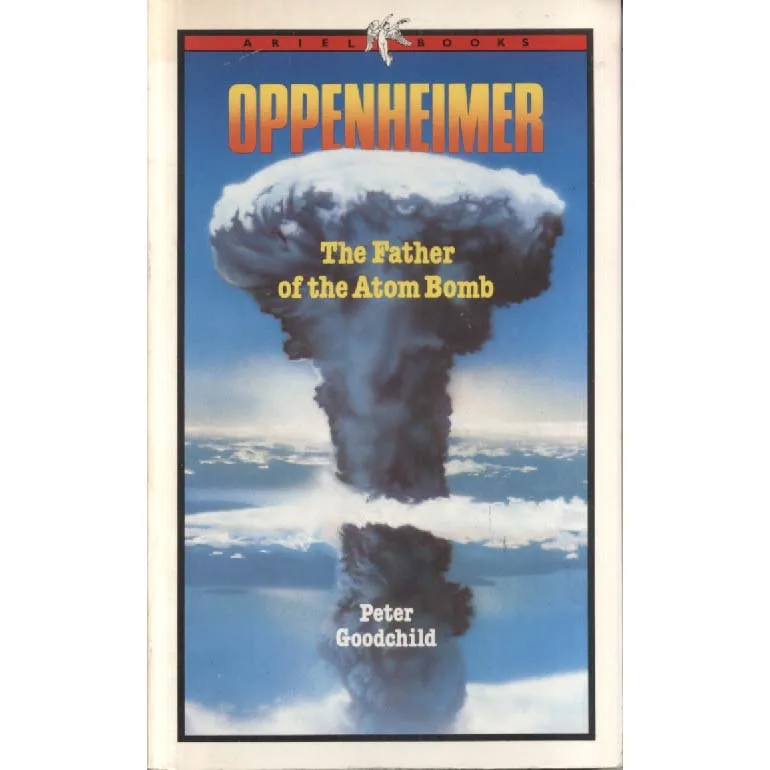
Publisher: BBC
Format: Paperback
ISBN: 9780563202127
Peter Goodchild’s Oppenheimer: Father of the Atom Bomb is about J. Robert Oppenheimer, the man who became a headline, a symbol, a security risk, a moral problem, and, rather inconveniently, a human being. The subtitle gives him the usual terrible honour: “Father of the Atom Bomb,” as though the bomb were a child, admittedly one with poor table manners and a talent for rearranging cities.
This BBC volume follows Oppenheimer from brilliant, intense theoretical physicist to director of Los Alamos, where the world’s cleverest people were gathered in the desert and asked to build the most consequential object in history while pretending this was a manageable administrative project. There were equations, committees, desert huts, military supervision, scientific rivalry, secrecy, moral unease, deadlines, and the general absurdity of civilisation trying to save itself by inventing a way to destroy itself more efficiently.
Oppenheimer was not the blunt engineer-hero type. He was elegant, difficult, literary, politically entangled, intellectually dazzling and personally elusive, the sort of man who could quote Sanskrit, charm a room, alarm officials, and still leave everyone wondering exactly where the centre of him was. He helped make the bomb possible, then became one of the people expected to explain what had just happened, which is a fairly harsh career progression even by twentieth-century standards.
The irony of his life is almost too large to handle neatly. During the war, he was indispensable. After the war, in the twitchy theatre of American anti-communism, indispensability became suspiciously recyclable. The same government that had placed him at the centre of its most secret weapon later treated his doubts, associations and independence as dangers. First he was useful enough to build the impossible; then he was troublesome enough to be publicly diminished. History is rarely elegant, but it does enjoy symmetry when being cruel.
Goodchild’s account sits in that grimly fascinating territory where science, politics and conscience collide. The atomic bomb was not merely a weapon; it was a new fact about the species. After 1945, humanity had to continue living in a world where humanity itself had become technically optional. Oppenheimer’s story is therefore not just biography but aftermath: what happens to a mind, a country and a civilisation when genius succeeds too well.
For readers of scientific biography, the Manhattan Project, Cold War politics, nuclear history, or the long human habit of inventing something and then looking surprised by the consequences, this is a sharp and accessible account. It belongs on the shelf where physics stops being abstract and starts casting very long shadows.
Good copy, as sold by Crappy Old Books. A solid BBC edition about a man who helped split the atom and was then, in the traditional manner, split by politics, conscience and reputation. No mushroom cloud included, though the subject does tend to make nearby books feel underpowered.
Keep browsing: See more History books Other books by Peter Goodchild
